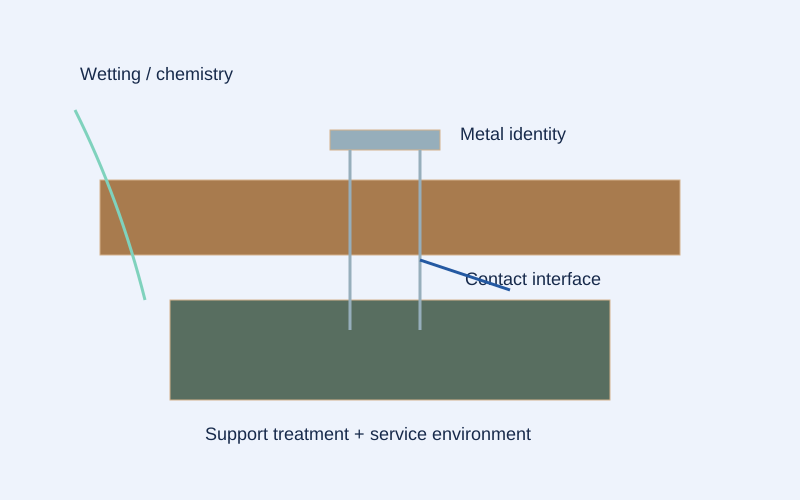
- Identify each metal and the exact support treatment.
- Wetting and chemistry act at the contact interfaces, including sheltered locations.
- The diagram maps questions, not a grade recommendation or corrosion service-life estimate.
Treat the grade as one field
Record the stated stainless designation exactly as supplied, together with the fastener product, size, head, drive, and intended use. A grade label identifies only part of the proposal. Ask for the relevant product documentation and traceability information rather than assuming that all screws sold as stainless have equivalent mechanical properties or application approvals.
Describe the actual exposure
List outdoor or sheltered placement, contact materials, possible salt exposure, chemical cleaning, and areas that remain wet or are difficult to inspect. FEMA discusses stainless steel within coastal corrosion guidance, but that does not turn a grade name into a universal guarantee. Have the proposed material reviewed against the project conditions and the complete connection.
Keep appearance evidence in its lane
A shiny surface, a stained head, or a casual magnet check should not replace documented alloy identification. Photograph markings and packaging, and preserve purchase records. If material identity is disputed, ask the responsible reviewer what verification method is appropriate. Do not convert an informal observation into a statement that the shipment meets a particular material standard.
Check the neighboring components
List the connector, washer, nut, clip, flashing, and support that will touch the fastener. Record their materials and coatings as well. Compatibility review should address the assembled detail, including substitutions. A higher-sounding fastener grade does not resolve an undocumented connector pairing or authorize changes to the specified geometry and installation method.
Write the acceptance record
State which documents support the selection, which exposure assumptions were used, and who accepted the connection. On delivery, compare product and lot labels with that record. Keep unopened packaging photographs before parts are mixed in site bins. For an alternative product, request a comparison covering material, geometry, and application instead of accepting alloy similarity as the entire substitution argument.
Practical checklist
- Record exact product and stated material designation.
- Describe exposure and all contacting components.
- Retain packaging and traceability records.
- Evaluate substitutions beyond the alloy field.
Worked example
Hypothetical example: a contractor proposes a different stainless screw with the same stated grade but a different head and thread. The review stays open until the geometry and connection documentation are addressed, rather than approving it on material name alone.
Limits of this guide
No stainless grade is promised to remain stain-free or provide a fixed service life. This guide cannot certify alloy identity, connection capacity, or coastal suitability. Those decisions require evidence tied to the actual product and assembly.
Continue the decision
Document coastal exposure before choosing hardware
Map mixed-metal contacts before approving a connection
Submit the connection as one coordinated assembly
Connection worksheet