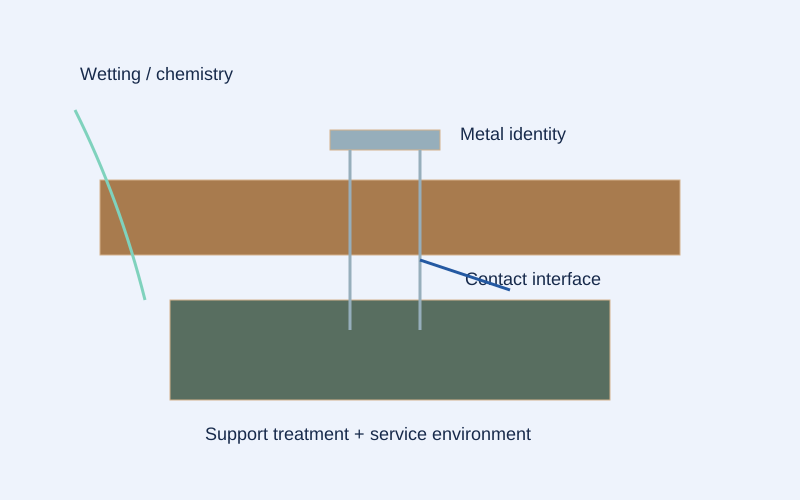
- Identify each metal and the exact support treatment.
- Wetting and chemistry act at the contact interfaces, including sheltered locations.
- The diagram maps questions, not a grade recommendation or corrosion service-life estimate.
Describe where the connection sits
Map exposed edges, sheltered undersides, splash locations, drainage paths, and interfaces near metalwork. Record the location using photographs and a plan rather than a single distance-to-water statement. Two connections on the same property may occupy different conditions. The review should identify which conditions are observed and which are assumptions used during material selection.
Read the source in context
FEMA's coastal connector guidance addresses corrosion protection and the importance of maintaining connections in coastal environments. Use it as a basis for questions, then identify the project-specific requirements and responsible reviewer. Do not turn an example material in a guidance document into blanket approval for every screw, clip, or connector sold with that description.
Review the complete metal assembly
Collect the proposed connector, fastener, washer, and adjacent metal specifications together. Identify coatings, stated alloys, and contacts with treated wood. Ask the reviewer to address substitutions and concealed interfaces explicitly. Hardware chosen one component at a time can leave unanswered questions about the combination, even when every component has an exterior-use description.
Include maintenance access
Mark which connections can be inspected after construction and which will be covered. Ask how future inspection or replacement would reach concealed hardware without uncontrolled dismantling. Record the specified maintenance instructions and who receives them. Access planning does not establish a service life, but it prevents the owner from discovering later that an important interface cannot be readily observed.
Close the documentation loop
Retain approved product records, installation photographs before concealment, and location identifiers. If actual exposure differs from the design assumptions, raise that change before release. For existing hardware with visible deterioration, document observations and obtain an appropriate assessment; do not extrapolate an expected remaining life from the apparent age of a neighboring connection.
Practical checklist
- Map exposure by connection location.
- Identify every contacting metal and treatment.
- Confirm inspection access before concealment.
- Record changes to the exposure assumptions.
Worked example
Hypothetical example: a seaside porch has sheltered connectors and a separate splash-exposed stair. The team records the two exposures separately and requests hardware acceptance for each detail rather than assigning the entire project a single unexamined coastal specification.
Limits of this guide
No distance from shore guarantees benign exposure, and no grade or coating guarantees a particular lifetime. Photos cannot establish hidden section loss or connection safety. Apply project requirements through a qualified reviewer when capacity or deterioration is in question.
Continue the decision
Specify stainless fasteners with evidence beyond the label
Map mixed-metal contacts before approving a connection
Record corrosion evidence without guessing remaining life
Connection worksheet