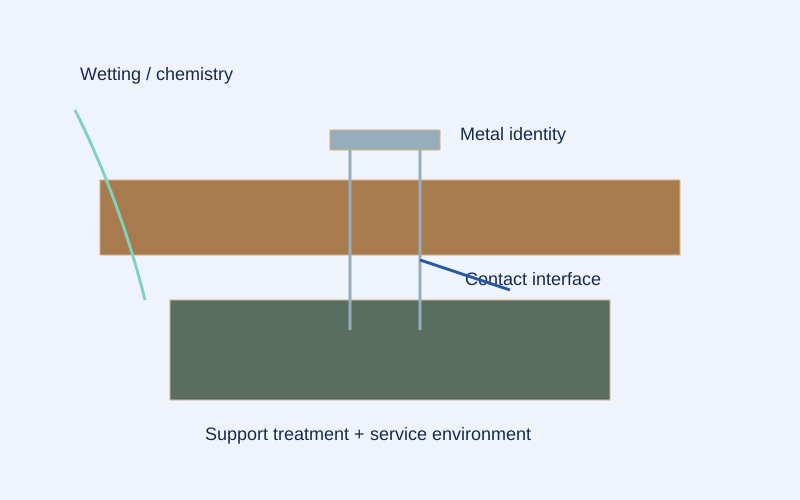
- Identify each metal and the exact support treatment.
- Wetting and chemistry act at the contact interfaces, including sheltered locations.
- The diagram maps questions, not a grade recommendation or corrosion service-life estimate.
Preserve the first observations
Photograph the connection in context, then the affected head or connector with a scale and location identifier. Record date, recent wetting, access limitations, and whether cleaning or removal has occurred. Describe what is visible: colored deposits, flaking, deformation, or a stain on wood. Avoid labeling every discoloration as measured metal loss.
Recover component identity
Find installation records, product packaging, invoices, and any retained samples. Document stated material and coating, adjacent metals, and treated-wood contact. If the installed component cannot be positively linked to those records, say so. An invoice showing stainless screws somewhere on the project does not establish the identity of a particular concealed fastener.
Compare locations carefully
Map affected and apparently unaffected connections, including different exposures and installation periods. Use consistent photographs and notes. USDA research comparing field corrosion with a moisture-based model illustrates that exposure assumptions matter. Do not extrapolate a universal rate from one visible screw or claim that neighboring clean heads prove the hidden portions are undamaged.
Plan any removal with the right reviewer
Where structural hardware is involved, have the responsible professional determine how investigation can proceed without compromising the assembly. Identify which pieces would be removed, how locations will remain traceable, and what examination is needed. Keep extracted parts labeled and avoid destructive cleaning before the reviewer determines whether deposits or surfaces should be preserved as evidence.
Write a bounded finding
State observed conditions, known identities, unknowns, and the next decision separately. A useful finding may be that material verification or an on-site assessment is needed; it need not claim a cause prematurely. If laboratory work is requested, identify the question it should answer instead of ordering a generic test and assuming it will determine remaining connection capacity.
Practical checklist
- Record context before cleaning or removal.
- Separate deposits from assessed section loss.
- Trace hardware identity to the affected location.
- Preserve samples using a reviewed investigation plan.
Worked example
Hypothetical example: brown marks surround several fastener heads beneath a wet planter. The record describes the marks and exposure, then requests hardware identification and inspection. It does not announce that all screws have failed or calculate years remaining.
Limits of this guide
Photos cannot determine concealed corrosion, material identity, or connection safety. No staining pattern establishes a universal cause or remaining life. A capacity concern requires an appropriate on-site assessment and, where needed, testing.
Continue the decision
Document coastal exposure before choosing hardware
Review fasteners against the actual treated support
Submit the connection as one coordinated assembly
Connection worksheet